
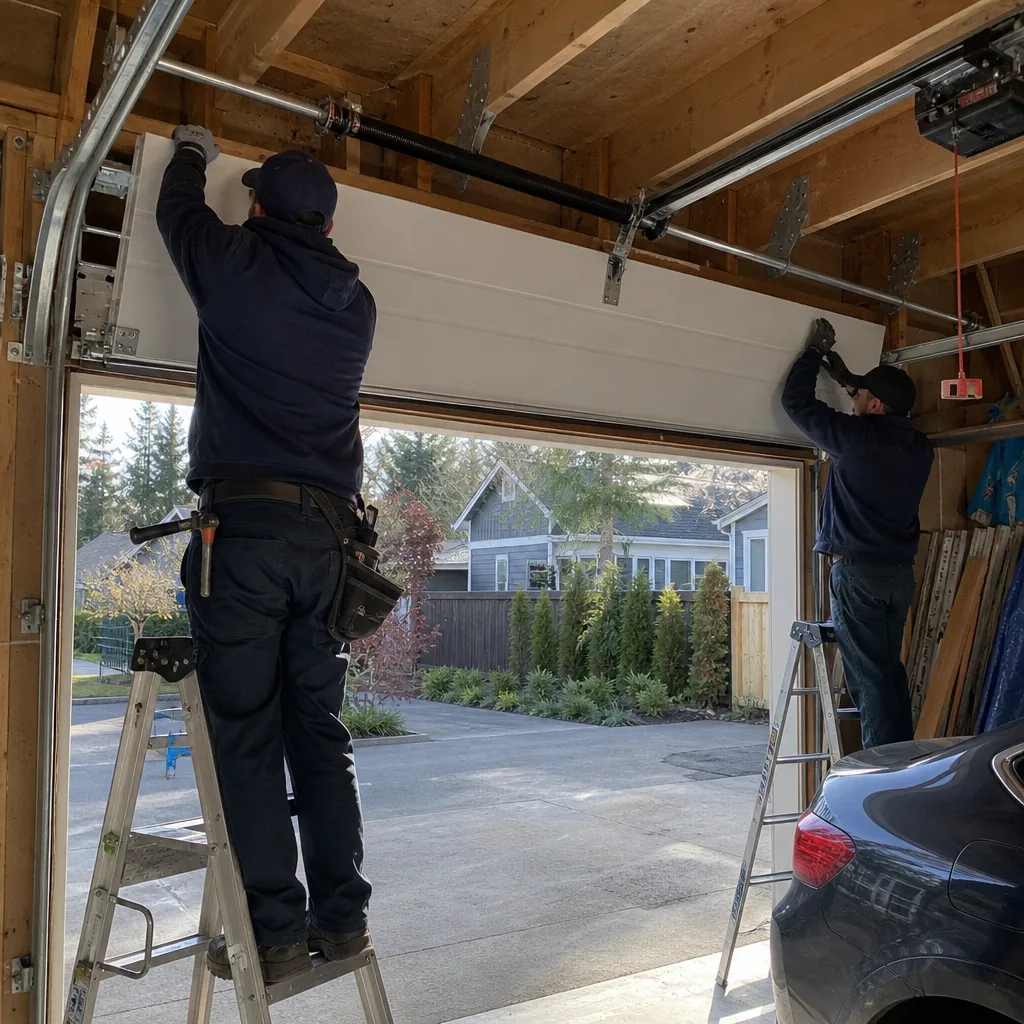
Last updated November 21, 2026
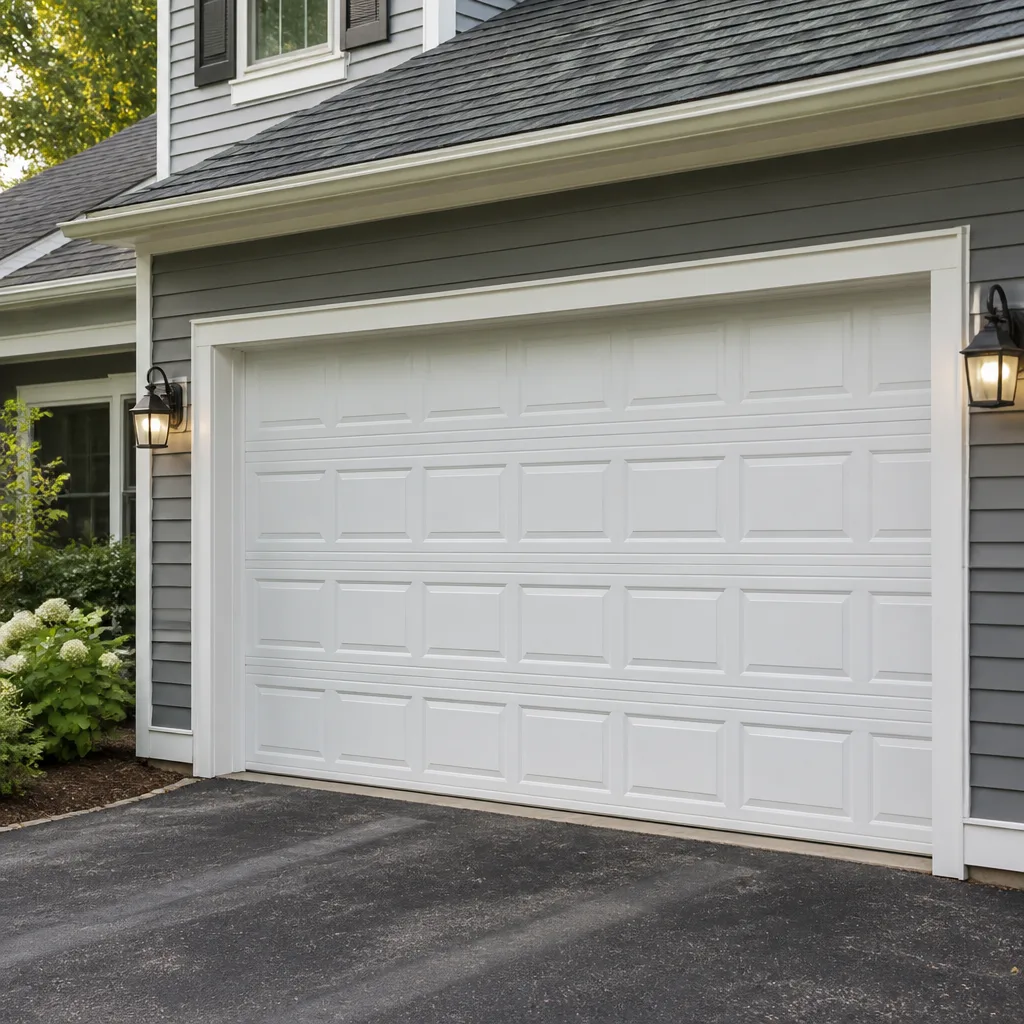 Raised-panel steel
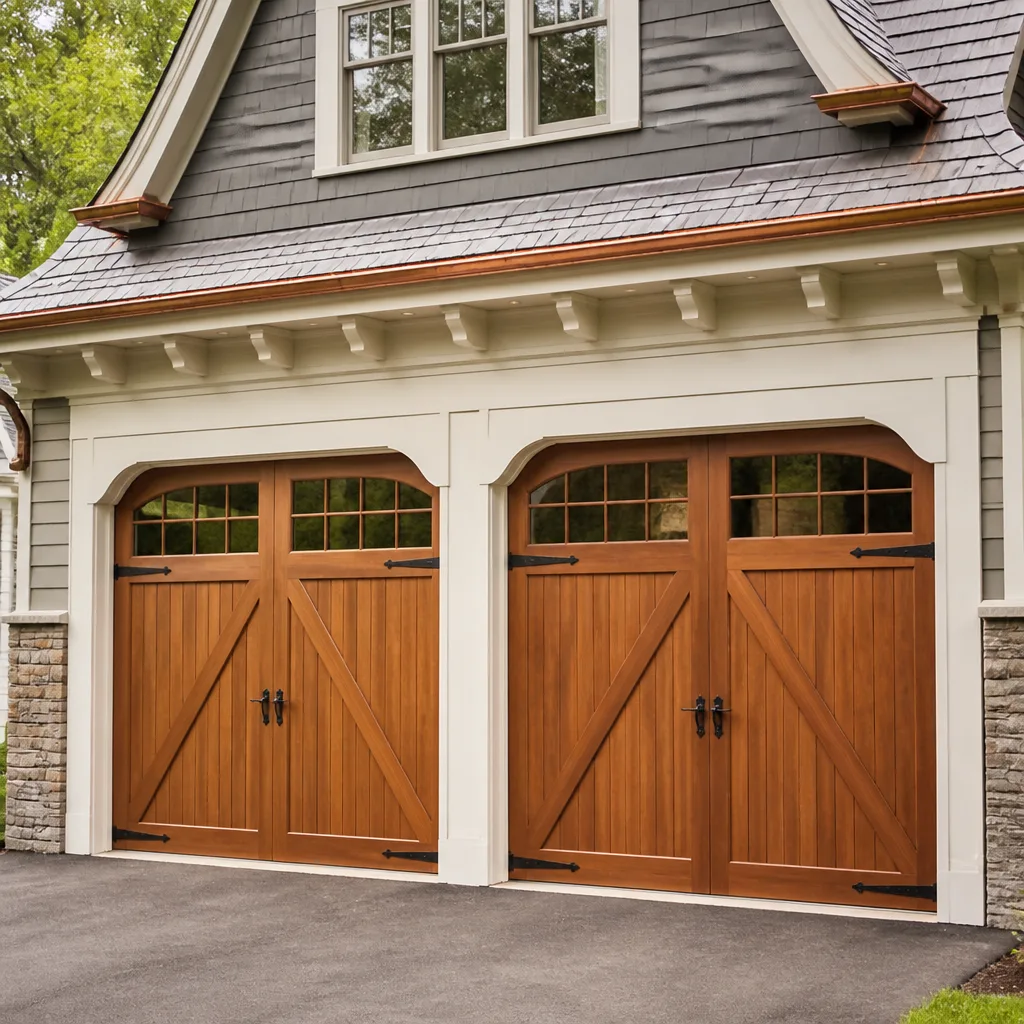 Carriage house
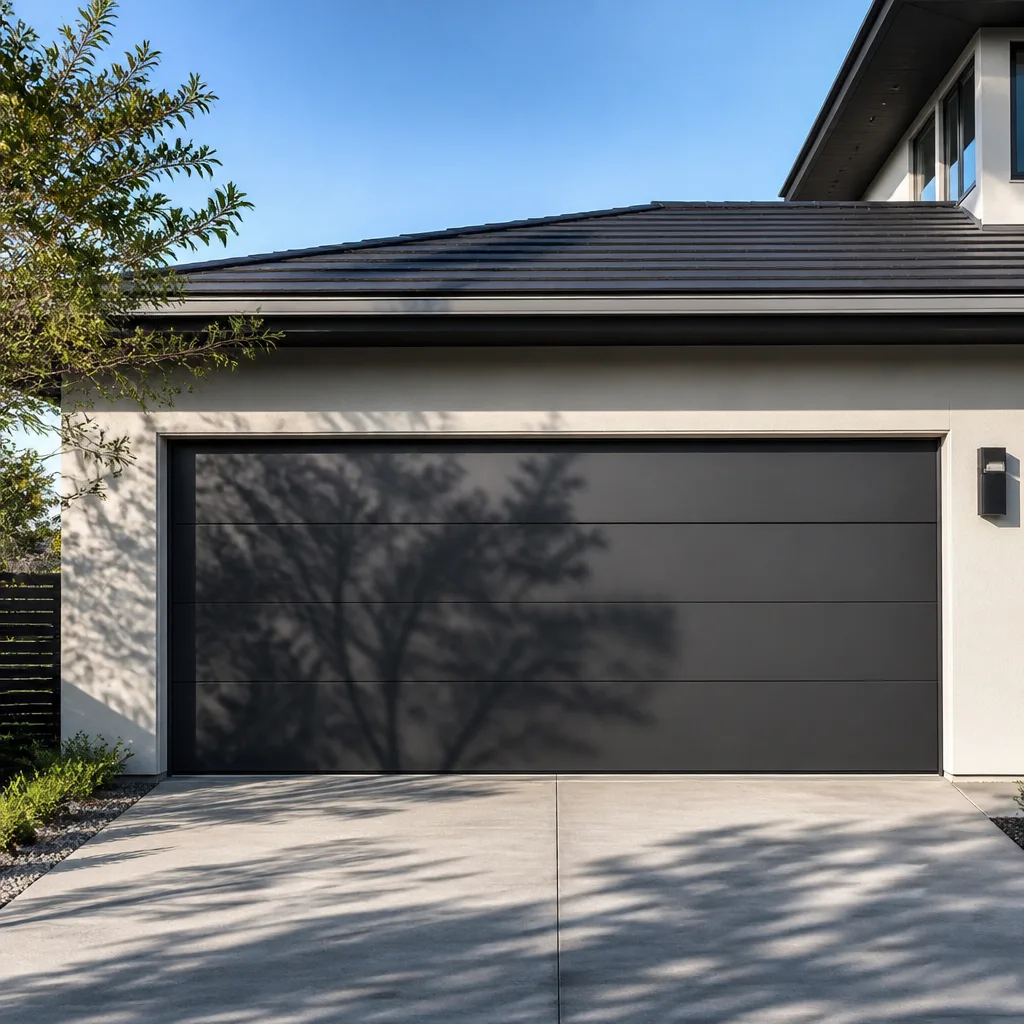 Modern flush
 Full-view glass
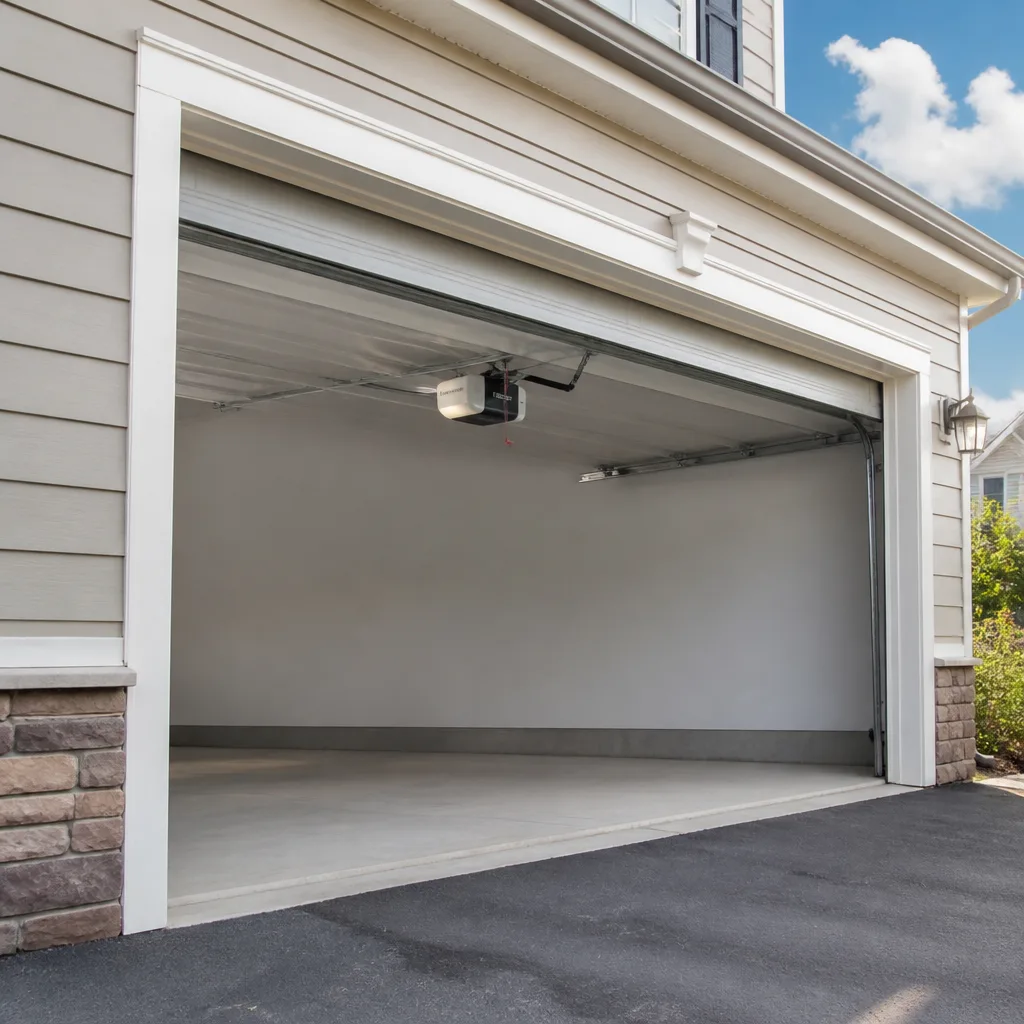 LiftMaster openers
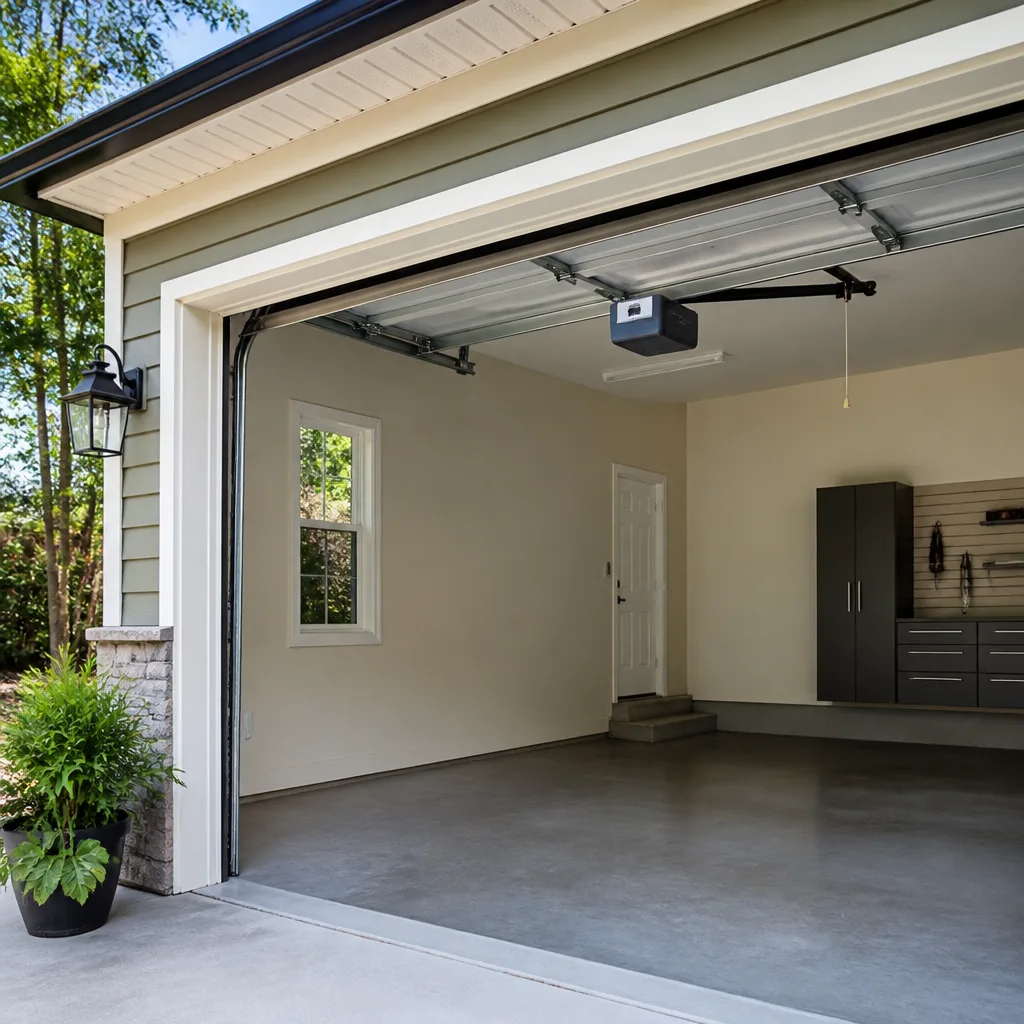 Chamberlain openers
Full 25-point door and opener safety check with every visit - springs, cables, rollers, tracks, and your LiftMaster or Chamberlain opener included
You get a price before we start. It does not change when the pro arrives.
Get your free estimateDIY vs Professional Garage Door: The Kirkland Homeowner’s Decision Guide
Torsion springs store enough energy to break a wrist or take out an eye when they release wrong. That’s not a scare tactic. It’s physics, and it’s the reason the DIY line on garage door work gets drawn at springs and cables rather than at every task on the door. Most of what goes wrong with a garage door in Kirkland is genuinely fixable by a careful homeowner with a Saturday morning and a screwdriver. A few jobs can hurt you badly if you get them wrong. This guide separates the two lists clearly, compares the real costs both ways, and explains what to do if you’ve already started a repair and gotten stuck. You’ll finish knowing exactly which jobs are yours and which ones belong to a technician with the right tools.
Quick Answer
You can safely handle weatherstripping, sensor alignment, lubrication, remote reprogramming, and minor track adjustments yourself. You should not touch torsion springs, extension springs, cable replacement, or structural panel work – those carry real injury risk and require tools and protocols most homeowners don’t have. Everything in between comes down to your comfort level, the age of the door, and whether the fix involves stored mechanical energy.
Styles & brands we work with
- Raised-panel steel
- Carriage house
- Modern flush
- Full-view glass
- LiftMaster openers
- Chamberlain openers
Table of Contents
- What’s genuinely DIY-safe on a garage door?
- What should you never attempt yourself?
- DIY vs professional: an honest cost comparison
- The Washington liability question
- You started a repair and stopped. Now what?
- What’s different about garage doors in Kirkland?
- A seasonal check you can do yourself
- When to call a professional
What’s genuinely DIY-safe on a garage door?
Five tasks on a garage door are well within reach for a homeowner who reads the instructions and takes their time. None of them involve stored spring tension, and none require special tools beyond a socket set, a level, and a tube of appropriate lubricant. If your door is otherwise operating normally and one of these is the problem, you can save yourself a service call without much risk.
- Weatherstripping replacement. The rubber or vinyl seal along the bottom of the door and around the frame wears out every few years. It pulls out of its channel, slides into a new one, and that’s the job. In Kirkland, where fall and winter bring steady rain, a worn bottom seal lets water track into the garage and along the door’s bottom panel. Replacing it is a thirty-minute task with a replacement seal cut to length.
- Safety sensor alignment. If the door reverses before it touches the floor, the photo-eye sensors near the floor are usually misaligned or blocked. Straighten them so the indicator lights on both units glow steady, and clear anything in the beam path. This solves a large share of “my door won’t close” calls.
- Lubrication. Hinges, rollers, and the opener’s rail take a garage-door-specific lubricant, not WD-40. A light application twice a year quiets a noisy door and slows roller wear. Never lubricate the tracks themselves – that attracts grit and causes binding.
- Remote and keypad reprogramming. Whether you have a Chamberlain, a Genie, or an older unit, the manual walks you through pairing a new remote or resetting a keypad code. This is a programming task, not a mechanical one.
- Minor track adjustments. A track that’s been nudged out of alignment by a bumped car or a stray ladder can often be tapped back into plumb with a rubber mallet. Key word: minor. If the track is bent, kinked, or pulling away from the frame, stop and call someone.
For anything beyond these five, the question shifts from “can I do this” to “should I.” Our garage door repair technicians have up to 12 years of experience, and the calls that started as a homeowner’s weekend project make up a meaningful share of them.
What should you never attempt yourself?
Four categories of garage door work belong to trained technicians, and the reason isn’t gatekeeping. It’s that each one involves either stored mechanical energy or structural load-bearing that can fail suddenly and without warning. A torsion spring under proper tension holds hundreds of pounds of force. When it releases wrong, it releases all at once.
- Torsion springs. The horizontal spring mounted on the shaft above the door. It’s wound to a specific number of turns that counterbalance the door’s weight. Loosening or adjusting it requires winding bars and a working knowledge of how many turns the door needs. A slip here can break a hand or send a winding bar across the garage. This is the single most dangerous DIY garage door job, and it’s also the most commonly botched.
- Extension springs. The springs that run parallel to the horizontal tracks on older doors. They stretch rather than twist, but they store comparable energy, and the safety cable that runs through the center of an extension spring exists because a failed spring can launch with enough force to damage a car or a person. If the cable is missing or rusted through, that’s an immediate stop-and-call.
- Cable replacement. The lift cables are under tension from the springs. Replacing one means releasing that tension first, and getting the cable wound correctly on the drum on reassembly. A cable that slips off a drum while tensioned can whip with serious force. In our experience, the injuries from this job happen fast and without much warning.
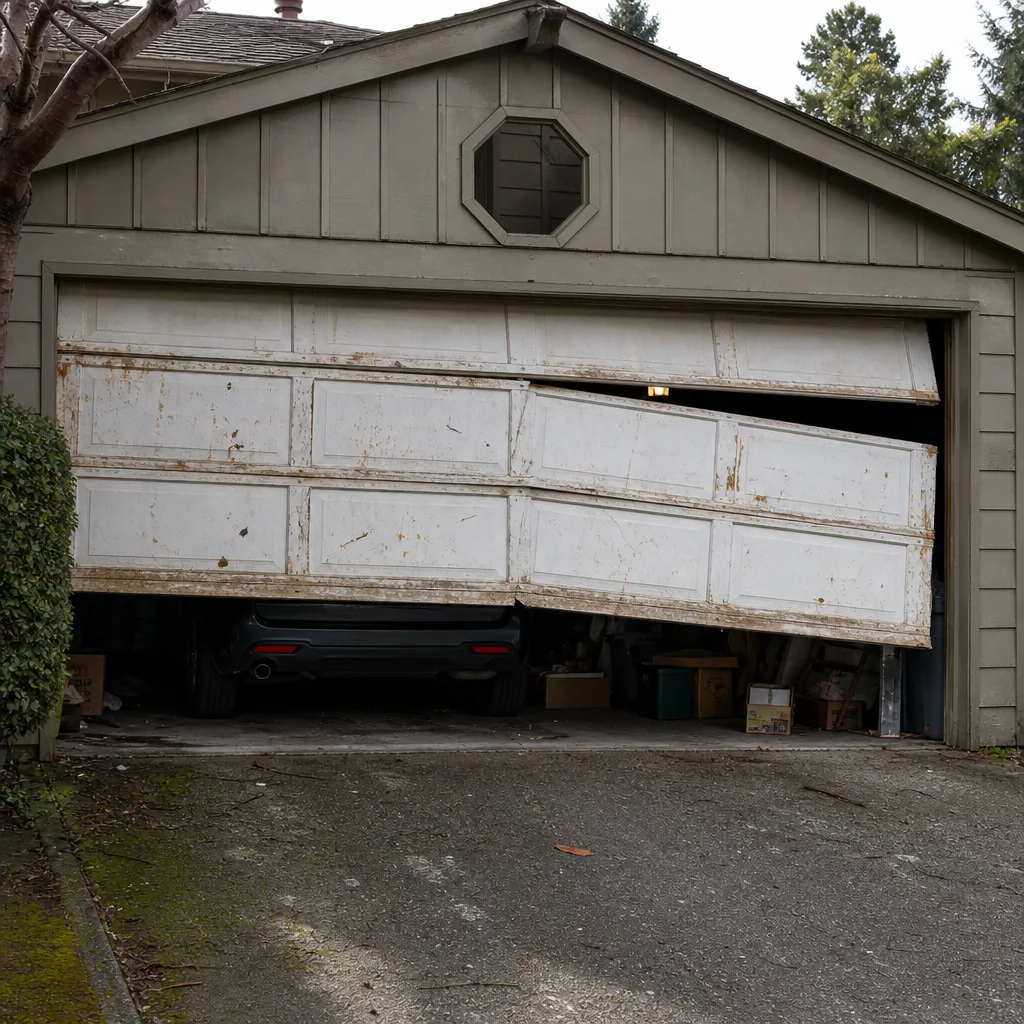
- Structural panel work. A dented or cracked bottom panel on a sectional door isn’t just cosmetic. On many doors the bottom panel carries the weather seal and the bottom bracket, and on some designs it contributes to the door’s structural rigidity. Replacing a panel means understanding how the sections interlock, how the hinges and rollers are loaded, and whether the new panel matches the door’s weight and balance. This is where a wrong guess can leave a door that binds, racks, or fails to close squarely.
If you’re not sure whether your particular job falls on the safe side of this line, that uncertainty is itself a signal. Call a specialist and describe what you’re seeing. We work on LiftMaster, Chamberlain, Genie, Clopay, Amarr, Wayne Dalton, Craftsman, and Raynor systems specifically, and the diagnosis usually takes less time than the drive to the hardware store. Our garage door spring repair service handles the spring and cable work that isn’t safe to do yourself.
DIY vs professional: an honest cost comparison
DIY saves real money when the job is on the safe list. It costs more than the original repair when the job is on the unsafe list and something goes wrong. Here’s how the math shakes out across the most common garage door tasks, with typical Kirkland-area cost ranges and a clear note on which ones carry risk.
- Weatherstripping replacement: DIY material cost is modest; a professional replacement typically runs $150-$300 depending on door width and seal type. Safe to do yourself.
- Safety sensor alignment: DIY is free; a professional sensor service call typically runs $100-$200. Safe to do yourself.
- Lubrication and tune-up: DIY is a tube of lubricant; a professional tune-up typically runs $100-$200. Safe to do yourself, though a technician will also check balance, spring tension, and roller wear while they’re there.
- Remote or keypad reprogramming: DIY is free with the manual; a professional visit typically runs $100-$175. Safe to do yourself.
- Minor track adjustment: DIY is a rubber mallet; a professional track realignment typically runs $125-$250. Safe if the track is only slightly out of plumb.
- Torsion spring replacement (one spring): A professional replacement typically runs $180-$340 for a single spring. A matched pair is usually replaced together, so a pair typically runs about $360-$680. Not safe to do yourself.
- Extension spring replacement (one spring): A professional replacement typically runs $150-$300 for a single spring, with a pair running roughly double. Not safe to do yourself.
- Cable replacement: A professional cable replacement typically runs $150-$300 per side. Not safe to do yourself.
- Bottom panel replacement: A professional panel replacement typically runs $250-$600 depending on panel size and match. Not safe to do yourself.
- Opener repair: A professional opener repair typically runs $150-$400 depending on the fault and the unit. Our garage door opener repair service covers both modern smart units and older legacy models. Not typically DIY-friendly beyond reprogramming and basic troubleshooting.
Here’s the honest part: a botched DIY spring job doesn’t just cost the spring. It can bend the shaft, damage the drums, twist the center bearing plate, or leave the door unbalanced in a way that wears the opener out early. The repair that follows can run well past what the original spring replacement would have cost. And that’s before you count a trip to urgent care. When the job is on the unsafe list, the “savings” from DIY only exist if everything goes right. When it doesn’t, you’re paying twice.
The Washington liability question
Most homeowners don’t think about their insurance policy until after something happens. For garage door work, the question worth asking before you pick up a winding bar is a simple one: if a DIY spring job injures someone in your household or a visitor, does your homeowner’s policy respond?
The short answer is that it depends on the policy language and the circumstances, and the only reliable way to know is to read your own policy or call your agent. Many policies exclude injuries arising from work the homeowner performed on the property in certain circumstances, and the exclusion language varies widely between carriers. What’s clear is that a garage door spring failure isn’t a small event. The force involved is enough to break bones, and the person most likely to be standing in the path is the one doing the work. That’s you.
The other side of the question is the one most homeowners miss: liability to others. If a door you worked on fails and damages a neighbor’s car in the driveway, or a visitor is injured by a door that dropped unexpectedly, the claim can end up against your policy. Whether it’s covered depends on the details. A licensed and insured local technician working on your door carries their own liability coverage, which is one of the quieter reasons to hire out the dangerous jobs.
We can’t tell you what your policy covers. We can tell you that the conversation with your agent is worth having before you decide to take on a spring or cable job yourself, and that the answer is often more complicated than “I’m covered.” If you’d rather not find out the hard way, call (844) 725-1599 for a free estimate on the work you’re considering.
You started a repair and stopped. Now what?
This happens more than people admit. Someone gets partway into a spring or cable job, realizes the door is in a more precarious position than expected, and stops. The door is now in an unfamiliar state, and the question is how to hand it off safely to a technician without making things worse. The answer is to disclose everything, leave it alone, and let the technician make their own assessment.
- Stop touching it. Once you’ve realized the job is beyond your comfort, put the tools down. Every further adjustment on a partially tensioned spring or a loosened cable adds risk. A door that’s half-disassembled is more dangerous than one that’s fully wound.
- Don’t try to “reset” it. A common impulse is to return the door to its original position so it looks untouched. Don’t. You could release stored tension that’s currently stable, or damage the drum or cable in a way that turns a repair call into a full door replacement.
- Disclose what you did, exactly. When you call, tell the technician what you touched, what you loosened, what you removed, and where the door was in its cycle when you stopped. “I started to unwind the torsion spring and stopped after a few turns” is exactly the kind of detail that changes how a technician approaches the job. There’s no judgment in it. They need the full picture to work safely.
- Photograph the current state. A few photos of the spring, cable, and door position help the technician understand what they’re walking into before they arrive.
- Keep people and cars clear of the door. Until a technician assesses it, treat the door as unstable. Don’t open or close it, don’t park under it, and keep kids and pets out of the garage.
We’ve seen every version of a half-finished DIY repair, and we’re not here to grade your work. We’re here to make the door safe and get it working. The Kirkland Garage Door Repair Co team handles this kind of handoff regularly, and the conversation is always more useful when the homeowner tells us exactly what happened.
What’s different about garage doors in Kirkland?
A garage door in Kirkland faces a combination that’s not universal across the country: wet winters, moderate temperatures, and a lot of mature trees. That mix shapes which parts of the door fail first and which repairs you can reasonably expect to need on a regular schedule. Understanding it helps you plan, and it helps you separate the work that’s truly urgent from the work that can wait for a scheduled appointment.
The wet season drives most of the wear. Rain and humidity work on the steel parts of the door – the hinges, the rollers, the springs, the opener’s rail – and they do it slowly but steadily. A door in Kirkland that gets no lubrication at all will start to squeal and bind within a few seasons, and a binding door puts extra strain on the opener. Lubricating the hinges and rollers twice a year is the single most effective thing a homeowner can do to extend the door’s life. It’s also on the DIY-safe list, which is convenient.
The trees are the other factor. Kirkland’s mature evergreens and maples drop needles, leaves, and small branches onto roofs and into gutters, and some of that debris finds its way onto the garage door’s tracks and into the opener’s rail. Needles are especially good at collecting in the track’s channel and causing the rollers to bind or jump. A quick sweep of the tracks, back to the wall, clears most of it. When something larger – a branch, a fallen limb – bends a track, that’s when the job stops being DIY.
The moderate climate is actually a break. Kirkland doesn’t see the deep freezes that crack springs in colder parts of the country, and it doesn’t see the prolonged heat that warps panels. Springs still wear out from simple cycle count, and openers still fail, but the seasonal extremes that make garage door work expensive elsewhere aren’t the main driver here. The main driver is moisture and debris, and both respond to regular attention.
A seasonal check you can do yourself
A ten-minute check twice a year catches most problems before they become calls. It’s entirely within the DIY-safe list. Here’s the sequence.
- Disconnect the opener and lift the door by hand. Pull the release cord, then lift the door to about waist height and let go. A properly balanced door will hold roughly in place. A door that drops or rises on its own is out of balance, and that means a spring problem. Stop here and call a technician – don’t try to adjust the spring yourself.
- Sweep the tracks. Use a dry cloth or a soft brush to clear needles, leaves, and grit from the track channels. Never lubricate the tracks. They should be dry and clean.
- Lubricate the moving parts. A light application of garage-door lubricant on the hinges, the roller stems, and the opener’s rail. Wipe off any excess.
- Check the weather seal. Look along the bottom of the door for cracks, missing sections, or daylight visible from inside the garage when the door is closed. A worn seal is cheap to replace and keeps water out during the rainy season.
- Test the safety sensors. With the door open, pass a hand or a broom handle through the sensor beam. The door should reverse or refuse to close. If it doesn’t, the sensors need alignment or replacement.
- Test the auto-reverse. Lay a piece of wood flat on the floor in the door’s path and close the door. It should reverse on contact. If it doesn’t, the opener’s force settings need adjustment, which is a technician job.
- Look at the springs. A visible gap in a torsion spring means it’s broken. Don’t touch it – call.
Schedule the seasonal check into your fall and spring routines, and you’ll catch most problems before they turn into spring or cable calls. Do the fall one when you’re already thinking about rain and the spring one when the trees drop their pollen. It’s the cheapest maintenance a garage door gets.
Common Mistakes to Avoid
- Using WD-40 on the door. It’s a solvent, not a lubricant, and it strips the existing grease without replacing it. Use a garage-door-specific lubricant on hinges and rollers, and keep it off the tracks entirely.
- Lubricating the tracks. Tracks should be clean and dry. Grease on the tracks collects grit and causes the rollers to bind, which is the opposite of what you wanted. Kirkland’s tree debris makes this mistake worse, because the grease holds every needle that lands on it.
- Winding a torsion spring without winding bars. A screwdriver or a pair of pliers is not a winding bar. It will slip. When it does, the spring releases and the tool goes flying. There’s no safe workaround for this one.
- Adjusting the opener’s force settings to compensate for a binding door. Turning up the force setting masks the real problem and wears the opener out faster. It also defeats the safety reverse, which is the feature that protects people and pets. If the door binds, fix the bind – don’t crank the force.
- Replacing one spring when the pair is due. Springs wear at the same rate. If one has failed, the other is typically close behind. Replacing one and leaving the other means a second service call in the near future, and a door that’s out of balance in the meantime. A pair is usually replaced together.
- Ignoring a small dent in the bottom panel. That panel carries the weather seal and, on many doors, part of the door’s structure. A small dent can turn into a leak, and a leak turns into a rusted bottom section. In Kirkland’s wet winters, this one moves faster than people expect.
- Forgetting to re-engage the opener after a power outage. After pulling the release cord during an outage, the door stays disconnected until you re-engage the trolley. Homeowners sometimes call about a door that “won’t open” when the opener is simply still disconnected. It’s a five-second fix once you know to check.
See the difference
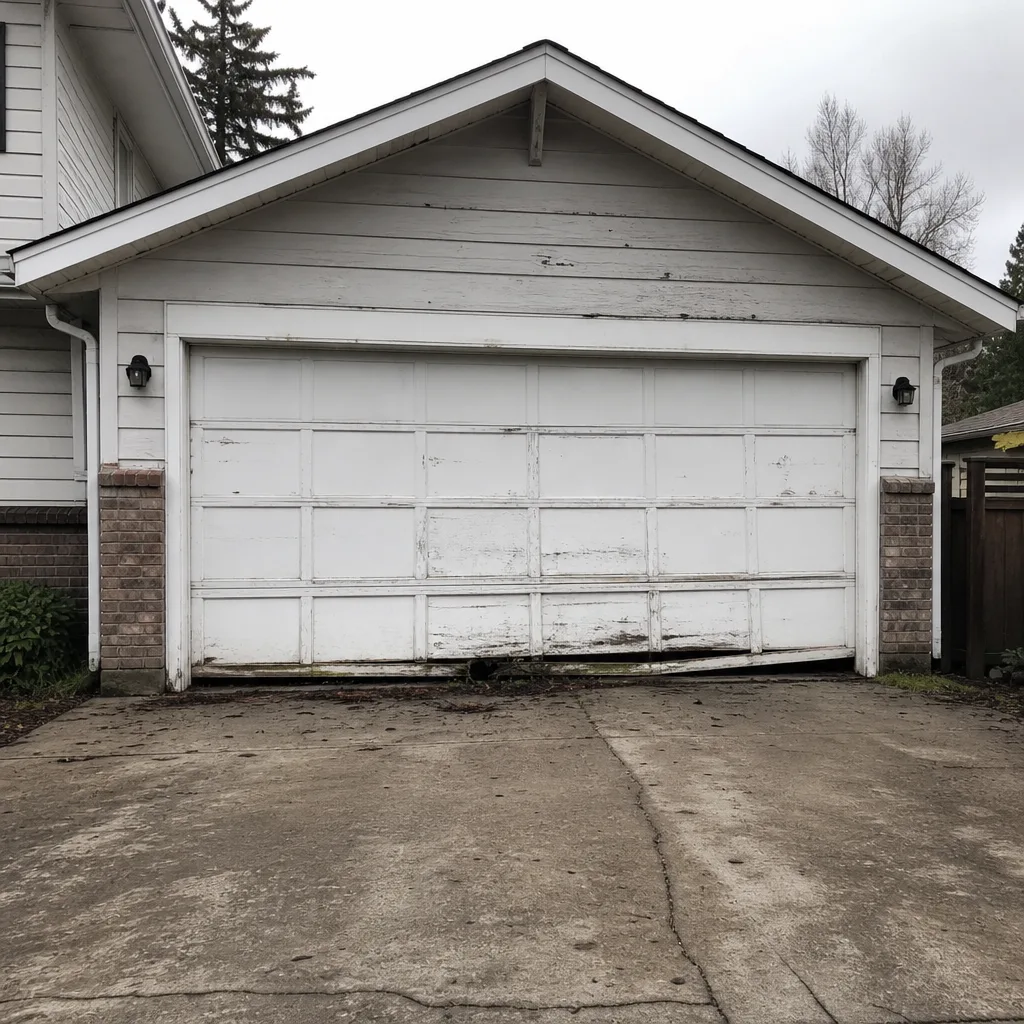 Before
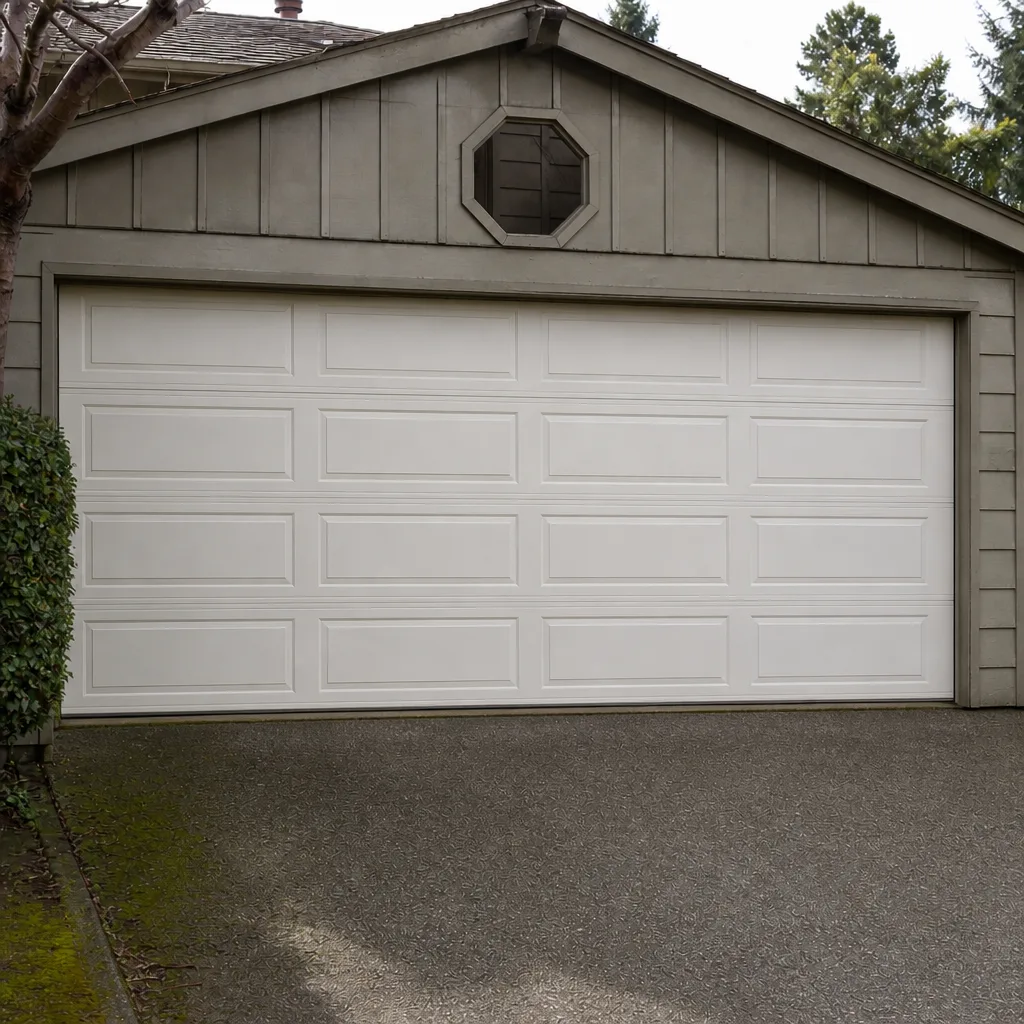
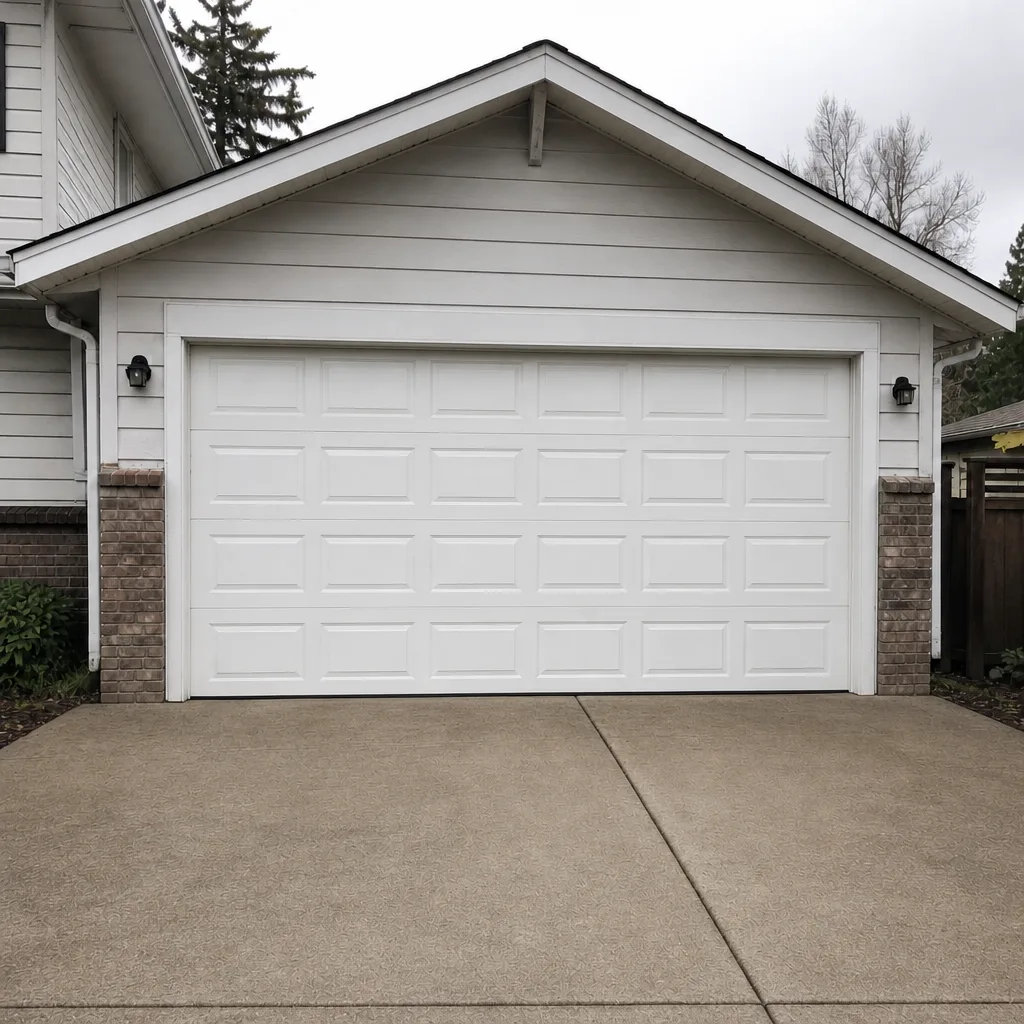 After
 Before
 After
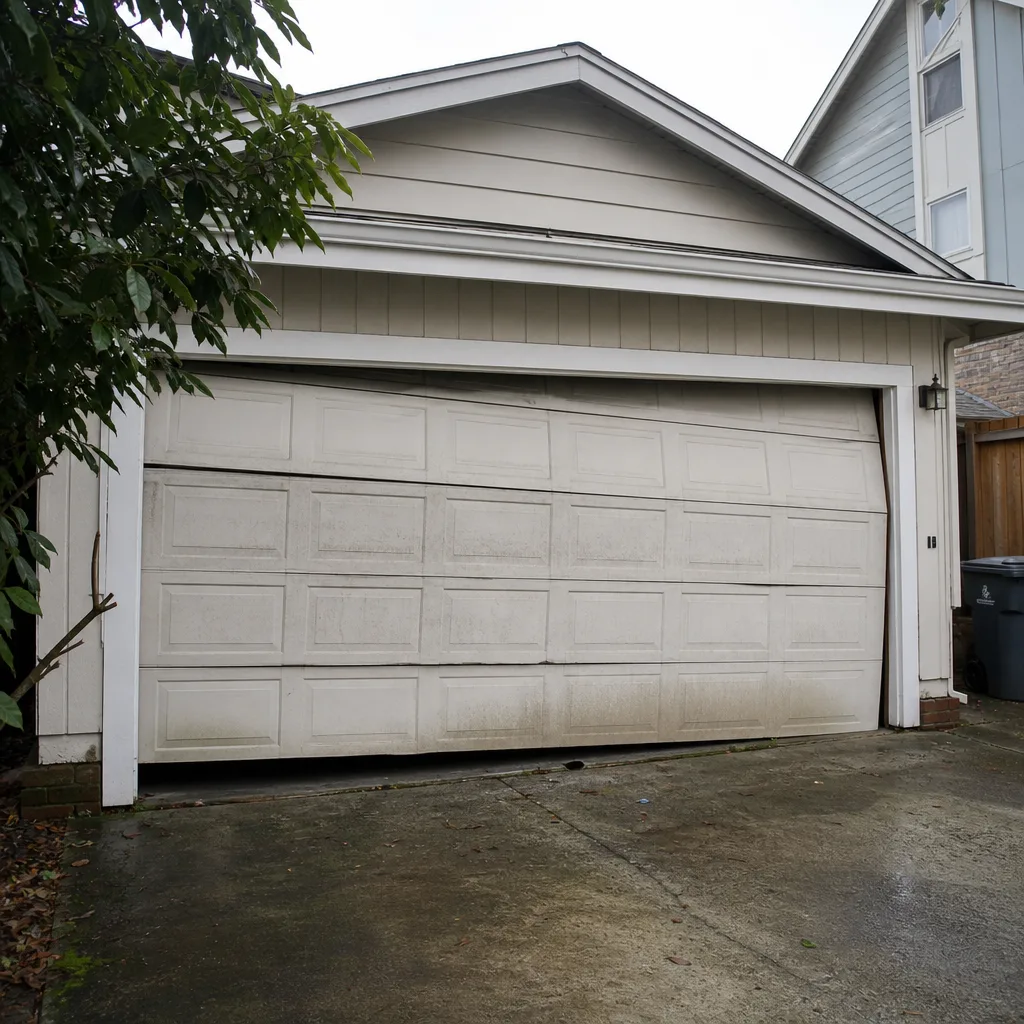 Before
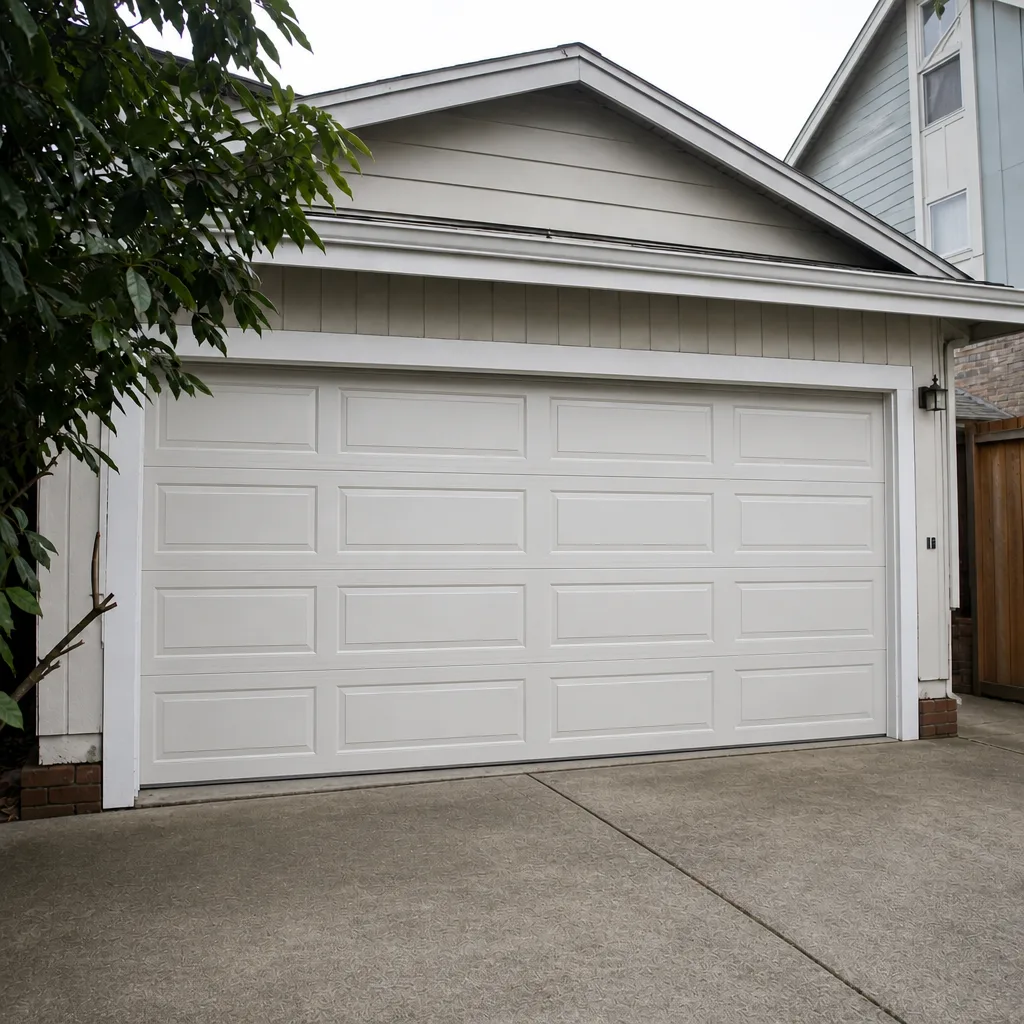 After
When to Call a Professional
Call a professional the moment the job involves a spring, a cable, or a structural panel. Call when the door comes off its tracks, when it drops or rises on its own when you lift it, when the opener’s auto-reverse fails to trigger, or when a track is bent rather than nudged. Call when you’ve started a repair and stopped partway, and call when the door won’t secure the house and you can’t wait for a scheduled appointment. Springs, openers, panels, full installs – one call covers it. Kirkland Garage Door Repair Co offers free estimates in Kirkland. Call (844) 725-1599. We answer 24/7. Fast dispatch from 7am to 7pm, Sunday through Friday. The price is quoted and agreed before any work starts, so there are no surprises when the invoice comes.
Frequently Asked Questions
No, not safely. A torsion spring stores enough energy to break bones when it releases wrong, and the tools needed – proper winding bars and a working knowledge of turn counts – aren’t things most homeowners have. Even experienced DIYers should hand this job to a technician. Call (844) 725-1599 for an exact quote – estimates are free.
A single torsion spring replacement in Kirkland typically runs $180-$340, and a matched pair typically runs about $360-$680 since pairs are usually replaced together. Extension springs run $150-$300 for a single spring, with a pair roughly double. The written estimate sets the final price. Call (844) 725-1599 for an exact quote – estimates are free.
Usually, yes. A stuck door, a broken spring, or a door that won’t secure the house is the kind of call we handle as emergency service, and same-day appointments are often available. Call (844) 725-1599. We answer 24/7. Fast dispatch from 7am to 7pm, Sunday through Friday. We’re closed Saturday and open Sunday through Friday, 7am to 7pm.
No. The price you’re quoted is set by the written estimate and agreed before any work starts. If we find something additional that needs attention once we’re on site, we’ll explain it and quote it separately before doing the work. You decide what gets done. Call (844) 725-1599 for an exact quote – estimates are free.
The local professional we connect you with is licensed and insured as their state requires. Every technician we connect you with focuses solely on garage door systems rather than general handyman work, which matters when the diagnosis depends on knowing a specific brand’s failure patterns. Call (844) 725-1599 if you’d like to talk through your door before booking.
Tell them exactly what you touched, what you loosened or removed, and where the door was in its cycle when you stopped. Full disclosure is the single most useful thing you can give them, and it helps them assess what’s left safely. There’s no judgment in it. Call (844) 725-1599 and describe what happened – estimates are free.
The Bottom Line
The DIY line on garage door work comes down to stored energy, not skill. Weatherstripping, sensor alignment, lubrication, remote reprogramming, and minor track adjustments are yours to handle, and doing them keeps the door running longer for very little money. Springs, cables, and structural panel work belong to a technician, because a failure in any of those can hurt you and cost more to fix than the original repair would have. When you’re not sure which side of the line a job falls on, that’s the moment to call. Call (844) 725-1599 for a free estimate. We answer 24/7. Fast dispatch from 7am to 7pm, Sunday through Friday.
Written by the team at Kirkland Garage Door Repair Co.